
Oura Ring Gen 3 Review (2025)
Can a Smart Ring Really Help You Sleep Better? We Tested It for a Year.
You wake up exhausted — again. You’ve spent eight hours in bed, but your brain feels foggy, your body unrefreshed. You’ve tried sleeping apps, cutting caffeine, even magnesium at night… nothing sticks.
We’ve been there too. That’s why we spent over a year testing the Oura Ring Gen 3 — a screenless, minimalist device that quietly tracks your body while you sleep. It doesn’t buzz or beep. It doesn’t need charging every day. And it just might change how you understand your nights — and your days.
In this review, we’ll walk you through our full experience with Oura, what it gets right (and wrong), and whether it’s worth the $299–$599 investment (plus subscription).
Why Sleep Tracking Actually Matters (Even If You’re Skeptical)
You might think sleep tracking is overhyped. Another tech toy with fancy graphs you’ll stop checking in two weeks. We get it — we were skeptical too.
But here’s the truth: most people don’t know how well (or poorly) they sleep. Subjective perception is deeply flawed. You might believe you slept fine, but your body disagrees — and over time, that disconnect causes real harm.
Tracking tools like the Oura Ring Gen 3 give you objective data: when you actually fell asleep, how much deep sleep you got, if your body was fighting off illness, and how ready your nervous system is for the day. These metrics aren’t just numbers — they’re signals your body has been trying to send for years.
According to the Sleep Foundation, understanding your sleep stages can improve everything from memory retention to cardiovascular health.
When you finally see your sleep for what it is — fragmented, shallow, or affected by stress — you can start making changes that matter.
What Makes Oura Ring Gen 3 Different?
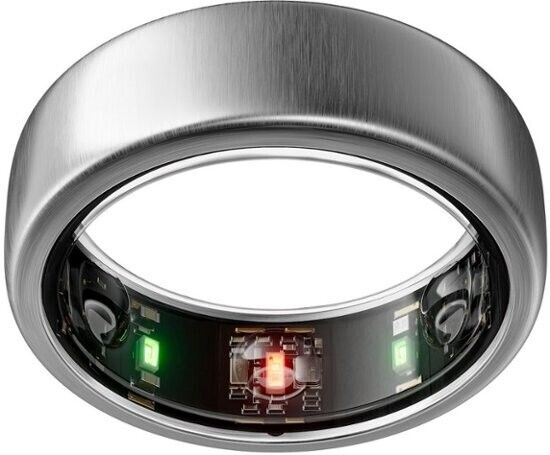
The Oura Ring Gen 3 is not your average sleep tracker. There’s no screen, no buzzing, no notifications. Just a sleek titanium ring you wear 24/7 — including in bed — that collects more physiological data than many bulkier wearables.
- Sleep stages: REM, deep, light
- Heart rate variability (HRV)
- Resting heart rate
- Respiratory rate
- Body temperature
- Nighttime movement
- Recovery readiness
All your data is converted into three simple scores: Sleep, Readiness, and Activity — visible in a beautifully designed app. What sets Oura apart is the experience: minimalism, comfort, and focus. You put it on and forget it’s there.
What Do These Metrics Actually Mean?
- HRV (Heart Rate Variability): A key indicator of how recovered your nervous system is. High HRV = resilience. Low HRV = stress, fatigue.
- Body Temperature: Even a slight overnight increase can signal infection, hormonal shifts, or cycle changes. Oura tracks trends, not just snapshots.
- Readiness Score: Combines sleep, HRV, and activity to tell you: “Go hard today” or “Take it slow.”
Our Experience: 365 Days with the Oura Ring
We tested the Oura Ring Gen 3 for over a year — through jet lag, illness, overwork, and weekends off the grid. And what we found surprised us.
-
It noticed things before we did.
Multiple times, the ring detected elevated body temperature and reduced HRV — a sign our immune system was under stress — before symptoms hit. That 24-hour head start allowed us to hydrate, rest, and avoid full-blown illness. -
It revealed how bad (and good) our sleep actually was.
Ever think you slept “fine,” but woke up groggy? Turns out, 5 hours of fragmented sleep isn’t fine. Oura’s graph showed periods of restlessness we would’ve never known about otherwise. And after trying different bedtime routines, we could see what worked. -
It taught us what recovery really means.
Instead of pushing through every workout, we learned to rest on days our readiness score dropped — leading to better long-term performance and energy.
Real Sleep Turnaround: Anna’s Story
Anna, a 34-year-old ICU nurse, was waking up five times a night and blamed it on work stress. But after two weeks of using Oura, she saw her room temperature dropped below 65°F after midnight — disrupting her deep sleep.
She adjusted her thermostat and saw a 28% increase in deep sleep within a week.
“I finally felt like myself again. The data helped me stop guessing.”
— Anna P., California
Top 3 Things We Learned Using the Oura Ring
- Stress kills sleep quality — even on “relaxing” evenings.
- Eating late drops readiness — consistently.
- 30 minutes earlier to bed > any supplement.
Oura vs. Apple Watch vs. Whoop 4.0 vs. Fitbit Sense 2
| Feature | Oura Ring Gen 3 | Apple Watch Series 9 | Whoop 4.0 | Fitbit Sense 2 |
|---|---|---|---|---|
| Sleep Tracking | Excellent | Basic | Strong | Good |
| Comfort at Night | Invisible | Bulky | Some irritation | Comfortable |
| Notifications | None | Full suite | None | Limited |
| Battery Life | 5–7 days | ~18 hrs | 4–5 days | 6+ days |
| Subscription? | Required | None | Required | Optional |
| Design | Ring | Watch | Strap | Watch |
Apple Watch = Great smart features, poor sleep value.
Whoop = Performance-focused, best for athletes.
Fitbit = Good balance for budget users.
Oura = Best for recovery, minimalism, and actionable insights.
Who Is the Oura Ring Gen 3 Really For?
- People struggling with sleep or burnout
- Professionals who want to optimize focus and recovery
- Wellness enthusiasts who prefer minimalist tech
- Anyone tired of being tethered to screens all day
But it’s not for everyone:
- If you want a built-in display
- If you hate the idea of subscriptions
- If you expect detailed workout metrics and GPS
Pros & Cons
Pros
- Extremely comfortable and discreet
- Impressive battery life (up to 7 days)
- Best-in-class sleep and readiness insights
- Beautiful, distraction-free app interface
- Encourages healthier behavior without overwhelm
Cons
- Full features require a subscription
- No display (may be a pro for some)
- Limited workout tracking (not built for athletes)
Price, Subscription & Value

The Oura Ring Gen 3 starts at $299 for the basic model and goes up to $549 for the premium Horizon edition in brushed titanium or gold. All versions require a $5.99/month subscription to unlock advanced features.
While some balk at the idea of a subscription, we found the cost justified — especially considering the long battery life, comfort, and depth of data. Over a year, the cost per day is about the same as a cup of coffee — but the value to your health may be far greater.
Oura Ring Gen 3: Frequently Asked Questions
Yes — it’s rated for up to 100 meters. You can swim or shower with it.
Yes. Naps over 15 minutes are automatically detected and factored into your readiness.
Yes — but you’ll only see limited data. Most insights require the membership.
Partially. You can tag workouts, but it doesn’t replace a fitness tracker for metrics.
We consistently got 5–6 days per charge, even with all sensors active.
Final Verdict: Is the Oura Ring Gen 3 Worth It?
Not everyone needs another wearable. But if you’re tired of guessing whether your sleep is “good enough”… if you’ve tried all the advice and still feel tired… if you want something beautiful, low-effort, and accurate…
Then yes — the Oura Ring Gen 3 is worth it.
It won’t fix your sleep on its own. But it will finally give you the clarity to understand it, adjust it, and respect it. And in our hyperconnected, overstimulated world, that’s worth more than most smart tech out there.
Want more ways to improve your sleep and daily performance? Discover our Top 5 Smart Sleep Gadgets That Actually Help (2025 Edition)